7 Things to Check Before Calling a 24 Hours Towing Service
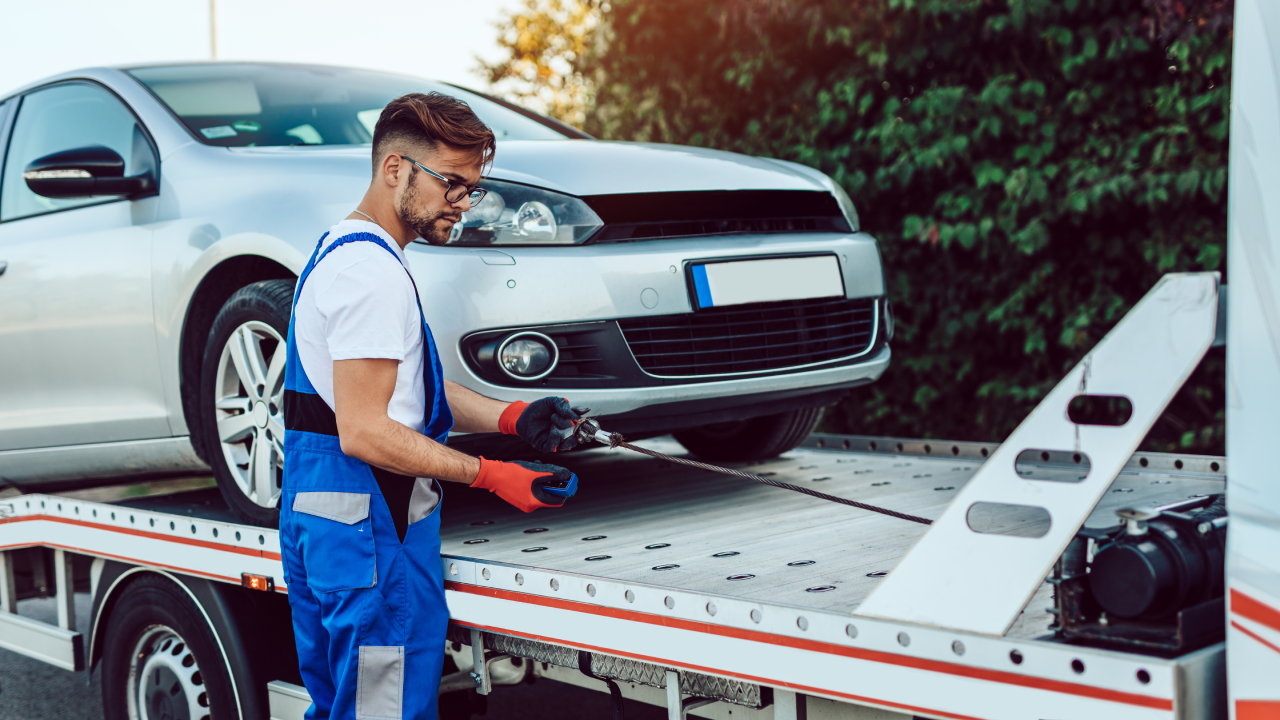
Before calling a towing service, check these roadside details.
Your vehicle stops. Traffic keeps moving. The weather is getting worse, and suddenly you are staring at your phone wondering what to do next.
A 24 hours towing service may be the next call when your vehicle cannot safely continue. But before making that call, there are several details worth checking.
Where exactly are you? Can the vehicle move? What caused the problem? Where does the vehicle need to go?
These questions may seem simple. Yet during a breakdown, collision, flat tire, or dead battery, small details can easily be forgotten.
If you are dealing with a roadside problem in Sault Ste. Marie, Ontario, taking a moment to gather the right information can make your towing request much clearer. Here are seven things to check before picking up the phone.
7 Things to Check Before Calling a 24 Hours Towing Service
A roadside emergency can create confusion quickly. You may know that you need help, but the towing company still needs basic information about the situation.
Before calling, check these seven points:
- Your exact location
- Whether the vehicle is safe to approach
- What happened to the vehicle?
- The vehicle type and condition
- Whether the keys are available
- What type of assistance do you need
- Where the vehicle needs to go
Let's look at each one.
1. Verify Your Exact Location
"Somewhere near Sault Ste. Marie" sounds like a location. It is not always enough to find a vehicle.
Before calling for towing, look around and identify as much location information as possible.
Useful details include:
- Street name
- Highway or road number
- Nearest intersection
- Direction of travel
- Nearby business
- Parking lot name
- Gas station
- Major landmark
- GPS location from your phone
If you are on a highway, your direction of travel can be particularly useful. If you are parked near a business, provide the business name when possible.
For drivers in Sault Ste. Marie, the difference between "I'm near the highway" and a precise road location can be significant when someone needs to locate the vehicle.
If your phone provides GPS coordinates, keep them available. You can also describe visible signs, intersections, or nearby buildings.
The question to ask yourself is simple: Could another person find my vehicle using the information I am about to provide?
If not, spend a few seconds gathering more details.
2. Check Whether the Vehicle Is Safe to Approach
The vehicle may have stopped. That does not mean the area around it is safe.
Before inspecting the vehicle, look at the surrounding conditions.
Consider:
- Moving traffic
- Road visibility
- Darkness
- Snow or ice
- Weather
- Your vehicle's position
- Whether you are blocking a travel lane
- Whether passengers have a safe place to wait
A breakdown on a quiet residential street is different from a disabled vehicle beside a busy roadway.
Do not put yourself in danger just to inspect a tire, engine compartment, or damaged body panel.
If the vehicle is involved in a collision and someone is injured, or if there is an immediate danger to people, contact emergency services as appropriate before arranging towing.
Roadside towing can address the vehicle problem, but it does not replace emergency assistance when people face an immediate safety threat.
If conditions are unsafe, please inform the towing company of what you can observe without putting yourself at additional risk.
3. Check What Happened to the Vehicle
"I need a tow" tells a towing company that your vehicle cannot continue. It does not explain why.
Try to identify what happened.
For example, the vehicle may have:
- Stopped running
- Developed engine trouble
- Lost a tire
- Experienced a dead battery
- Been involved in a collision
- Become stuck
- Failed to start
- Developed a mechanical problem
- Become unsafe to drive
You do not need to diagnose the vehicle yourself.
Instead, describe what you noticed.
Did the engine suddenly stop? Did you hear an unusual sound? Did the vehicle lose power? Did a tire become damaged? Did the vehicle refuse to start?
This information can help clarify what type of emergency towing or roadside assistance may be appropriate.
A vehicle that rolls normally is a different situation from one that cannot move because of collision damage or wheel problems.
When requesting a 24/7 towing service, be as accurate as possible. If you're unsure of the problem's cause, please say so.
Guessing can create more confusion than admitting that the cause is unclear.
4. Check the Vehicle Type and Condition
Not every vehicle presents the same towing situation.
Before calling, identify what you are driving.
It could be:
- A car
- SUV
- Pickup truck
- Van
- Motorcycle
- Another type of vehicle
Then consider the vehicle's condition.
Can it roll?
Can the wheels turn?
Is the vehicle sitting normally?
Is it stuck?
Is there visible collision damage?
Are the tires intact?
Does the vehicle move at all?
When determining how to move the vehicle, these details can be crucial.
For example, a vehicle with significant collision damage may not behave like a vehicle that simply will not start. A vehicle stuck in a difficult position may also require different handling from one parked normally on a driveway.
You do not need to know the technical solution.
Simply provide an accurate description.
That is much more useful than saying, "The car is broken."
5. Check Whether the Keys Are Available
It sounds minor.
It is not something you want to discover only after the towing operator arrives.
Before requesting a 24 hours towing service, check where the vehicle keys are.
Possible situations include:
- Keys are inside the locked vehicle.
- Keys have been lost.
- The key is damaged.
- The key fob is not working.
- The ignition is not functioning.
- Someone else has the keys.
Please inform the towing company about the situation during the call.
For example, if the keys are locked inside the vehicle, mention it. If the ignition does not work, mention that too.
The same applies when the key fob does not unlock or start the vehicle.
These details are part of the vehicle's condition. Omitting them can create confusion when moving the vehicle.
A few extra seconds during the phone call can prevent an avoidable misunderstanding later.
6. Check What You Need From the Towing Company
Here is where many roadside calls become vague.
A driver may simply say, "I need a tow."
Could you please clarify your specific needs?
Your situation might involve:
- Vehicle towing
- Roadside assistance
- Moving a disabled vehicle
- Vehicle recovery
- Transport after a collision
- Moving a vehicle that cannot be driven safely
These are not necessarily the same situation.
Suppose your vehicle has a flat tire. You may need roadside assistance rather than vehicle transport.
Now imagine your vehicle was involved in a collision and cannot safely move. You may need towing to another location.
Or perhaps the vehicle is stuck and needs to be moved from where it became disabled.
Explain the problem clearly.
If you need emergency roadside assistance, say what happened and what the vehicle is doing. If you think the vehicle needs transportation, please share that information as well.
The clearer your request, the less time you may spend explaining the situation back and forth.
7. Check Where the Vehicle Needs to Go
The pickup location is only half of the towing request.
Where should the vehicle go?
Before calling, identify the destination whenever possible.
It could be:
- Your home
- A repair shop
- A dealership
- A collision centre
- A secure parking location
- Another requested destination
Have the destination address available.
If you know which repair facility will inspect the vehicle, please keep its address handy.
This is particularly useful after a collision or mechanical breakdown because the vehicle may not be drivable.
A clear pickup address plus a clear destination gives the towing company two important pieces of information from the beginning.
If you have not decided where the vehicle should go, say so during the call rather than giving an uncertain destination.
What Information Should You Give a Towing Company?
Your phone call does not need to be complicated.
Have these details ready:
- Your exact location
- Your phone number
- Vehicle make and model
- Vehicle type
- Vehicle condition
- Reason for the tow
- Whether the vehicle can roll
- Whether the wheels can turn
- Whether the keys are available
- Your destination
- Any immediate roadside hazards
For example:
"My SUV is stopped on [road name] near [intersection]. It will not start, but it can roll. The keys are with me, and I need it taken to [destination]."
That gives the towing company a much clearer picture than simply saying, "My car is stuck."
If you are searching for a towing service near me, gather these details before making the call whenever conditions allow.
When Should You Call for Emergency Towing?
Sometimes the warning signs are obvious.
Your vehicle may technically move, but that does not mean it should be driven.
Consider arranging towing when the vehicle has a serious mechanical problem that makes continued driving unsafe.
Examples include:
- Major brake problems
- Steering problems
- Severe tire damage
- Serious collision damage
- Severe overheating
- A vehicle that cannot maintain safe control
- A vehicle that cannot move safely
- A vehicle stranded in a hazardous position
Trying to reach a repair shop by driving an unsafe vehicle can create additional problems.
If the brakes are not working correctly, for example, continuing to drive is not a reasonable solution.
Likewise, serious collision damage may affect the vehicle's ability to operate safely.
When in doubt, describe the symptoms to the towing company and explain why you believe the vehicle cannot safely continue.
A 24 hours towing service can be particularly relevant when a breakdown happens outside normal business hours, but the same safety principles apply regardless of the time.
Common Mistakes Drivers Make During a Roadside Breakdown
A breakdown is stressful.
That is exactly when small mistakes become easier to make.
Here are several problems drivers should try to avoid.
Giving an Unclear Location
"I am near the city" does not tell a towing company where the vehicle is.
Provide the road, intersection, direction of travel, landmark, or GPS location whenever possible.
Forgetting to Mention Vehicle Damage
A vehicle involved in a collision may have damage that affects how it can be moved.
Mention visible damage rather than assuming it does not matter.
Trying to Drive an Unsafe Vehicle
A vehicle that starts does not automatically mean it is safe to drive.
Brake, steering, tire, overheating, and serious collision problems deserve caution.
Standing Too Close to Traffic
Do not concentrate solely on the vehicle to the extent that you overlook the surrounding traffic.
Choose a safer position when possible and follow local safety practices.
Omitting the Vehicle Type
A car, pickup truck, SUV, and motorcycle are different vehicles.
Tell the towing company what you are driving.
Forgetting the Destination
If you already know where the vehicle needs to go, have that address ready.
Providing Incomplete Contact Information
Make sure the towing company has a working phone number so they can reach you if needed.
Waiting Too Long in an Unsafe Location
If the vehicle is stopped in a hazardous position, do not assume you need to remain beside it while trying to solve the problem yourself.
Your safety comes first.
Why Sault Ste. Marie Drivers May Need Towing Assistance
Roadside problems can happen anywhere in Sault Ste. Marie, Ontario.
A vehicle can stop working during a short trip across town, during highway travel, or while travelling farther from the urban area.
Seasonal conditions can also change driving conditions.
Snow and ice can make vehicle problems more difficult to manage. Cold weather can create additional challenges for a vehicle that already has a mechanical issue. Poor visibility can also make a roadside stop more difficult.
Then there are ordinary problems.
A flat tire.
A dead battery.
A vehicle that refuses to start.
A collision.
A vehicle that becomes stuck.
None of these situations necessarily means the driver did something wrong. Vehicles can develop problems without warning.
That is why knowing what information to provide during a towing call matters.
If you are dealing with a roadside problem in Sault Ste. Marie, please begin by assessing your surroundings. Then gather the vehicle and location details you can safely provide.
Whether you are searching for 24 hour towing service, emergency towing in Sault Ste. Marie, or roadside assistance in Sault Ste. Marie, knowing the situation before calling can make the conversation much clearer.
FAQs
What information should I provide when calling our towing company?
Give your exact location, vehicle type, vehicle condition, reason for assistance, key status, and destination. Mention any immediate hazards around the vehicle.
Can I request towing at night?
Yes, towing needs can occur outside regular daytime hours. If you need a 24 hours towing service, provide your location and explain what happened to the vehicle.
What should I do if my vehicle breaks down on a busy road?
Focus on safety first. Move to a safer position if you can do so without creating additional danger. Avoid standing close to moving traffic and tell the towing company about your location and surroundings.
Can a towing company move a vehicle after a collision?
A towing company may be able to move a collision-damaged vehicle, depending on its condition and circumstances. Tell the company about visible damage and whether the vehicle can roll or steer.
What if I do not know my exact location?
Look for road signs, intersections, businesses, landmarks, highway information, or your phone's location data. Please provide the towing company with any location information you can safely identify.
Should I stay inside my vehicle while waiting for a tow?
The answer depends on the roadside environment. Traffic, weather, vehicle position, and other conditions matter. Avoid putting yourself in a dangerous position and follow appropriate roadside safety practices.
Can I request towing to a repair shop?
You can tell the towing company where you want the vehicle taken. Please have the repair shop's address available if possible.
What should I check before calling a 24 hours towing service?
Verify your exact location, roadside safety conditions, what happened to the vehicle, the vehicle type and condition, key availability, the type of assistance needed, and the destination.
Moving Forward
A roadside breakdown can turn an ordinary drive into a situation that demands quick decisions.
But the call for a 24 hours towing service does not have to be complicated.
Before calling, check the essentials:
- Where the vehicle is
- What happened
- Whether the area is safe
- Whether the vehicle can move
- What type of vehicle do you have
- Whether the keys are available
- Where the vehicle needs to go
Those details give the towing company useful information from the start.
If you need towing assistance in Sault Ste. Marie, Call Northern Spire Towing & Recovery at +1 705-992-6567.
Northern Spire Towing & Recovery is located at 534 Third Line E, Sault Ste. Marie, ON P6B 5Y8, Canada.
When the vehicle will not continue, gather the information you can safely provide, explain the situation clearly, and make the call.